Product Page Optimisation
Improving purchase intent through clearer hierarchy, stronger decision cues, and experimentation.
Project summary
I redesigned cinch's product detail page to make vehicle information clearer and keep the next step in view. I led the UX through phased A/B testing, and one change, a sticky call-to-action, lifted add-to-basket by 35%.
Overview
The product detail page is one of the most commercially critical points in the vehicle buying journey, where users shift from casual browsing to serious evaluation. While traffic to the page was strong, behavioural patterns showed hesitation before users progressed to intent actions. Many users left without interacting with key information that supports decision making. This work aligned with a broader initiative to improve performance across high traffic commercial surfaces, where small improvements in behaviour can have a big overall impact.
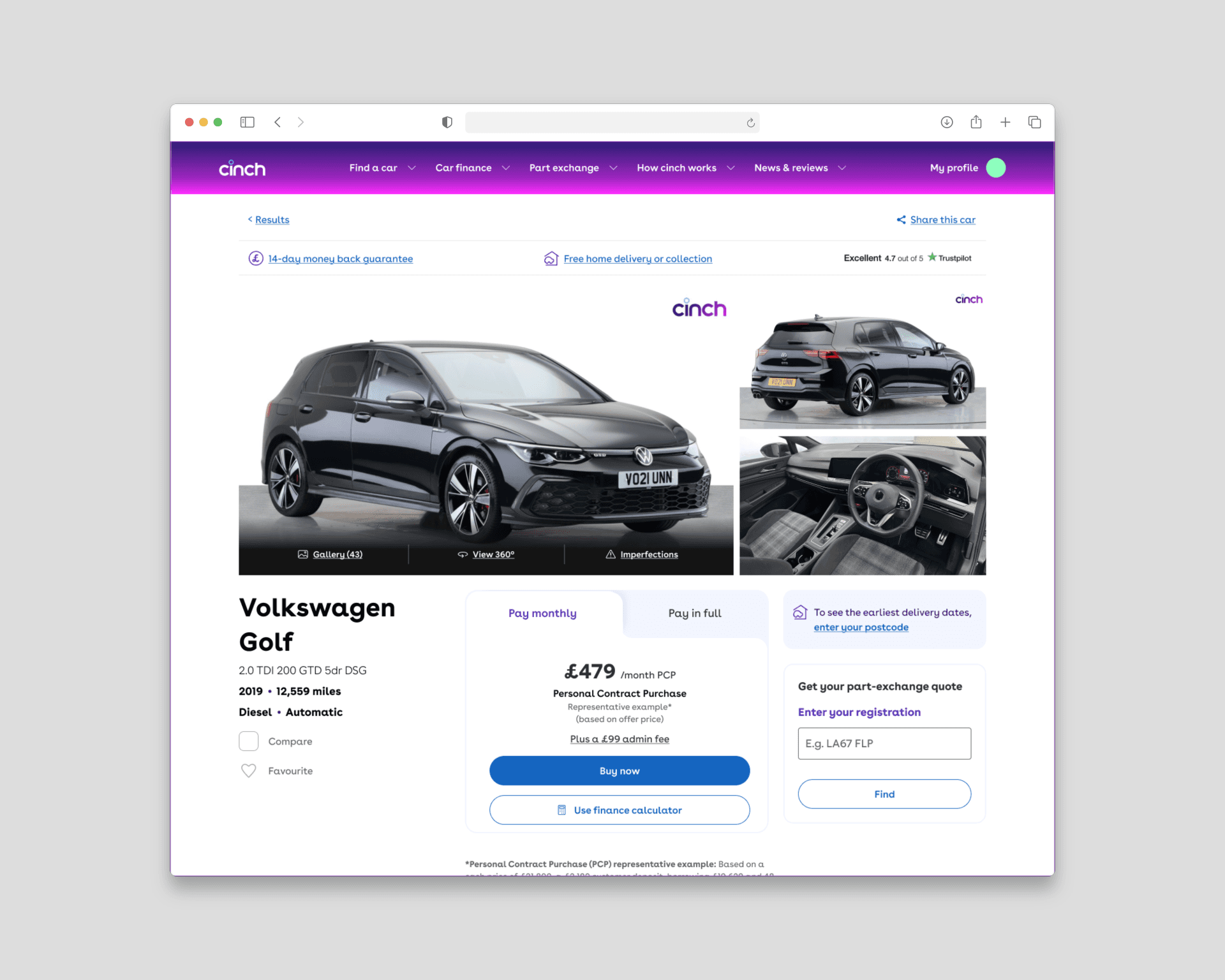
The page's hierarchy wasn't obvious with the old layout.
The problem
Vehicle detail pages contained a large amount of information, but hierarchy did not clearly guide users toward what mattered most. Important details were present but not surfaced at the right moment, leading to cognitive overload and lower engagement. The challenge was to improve clarity and prioritisation without removing necessary information or disrupting existing technical and design constraints.
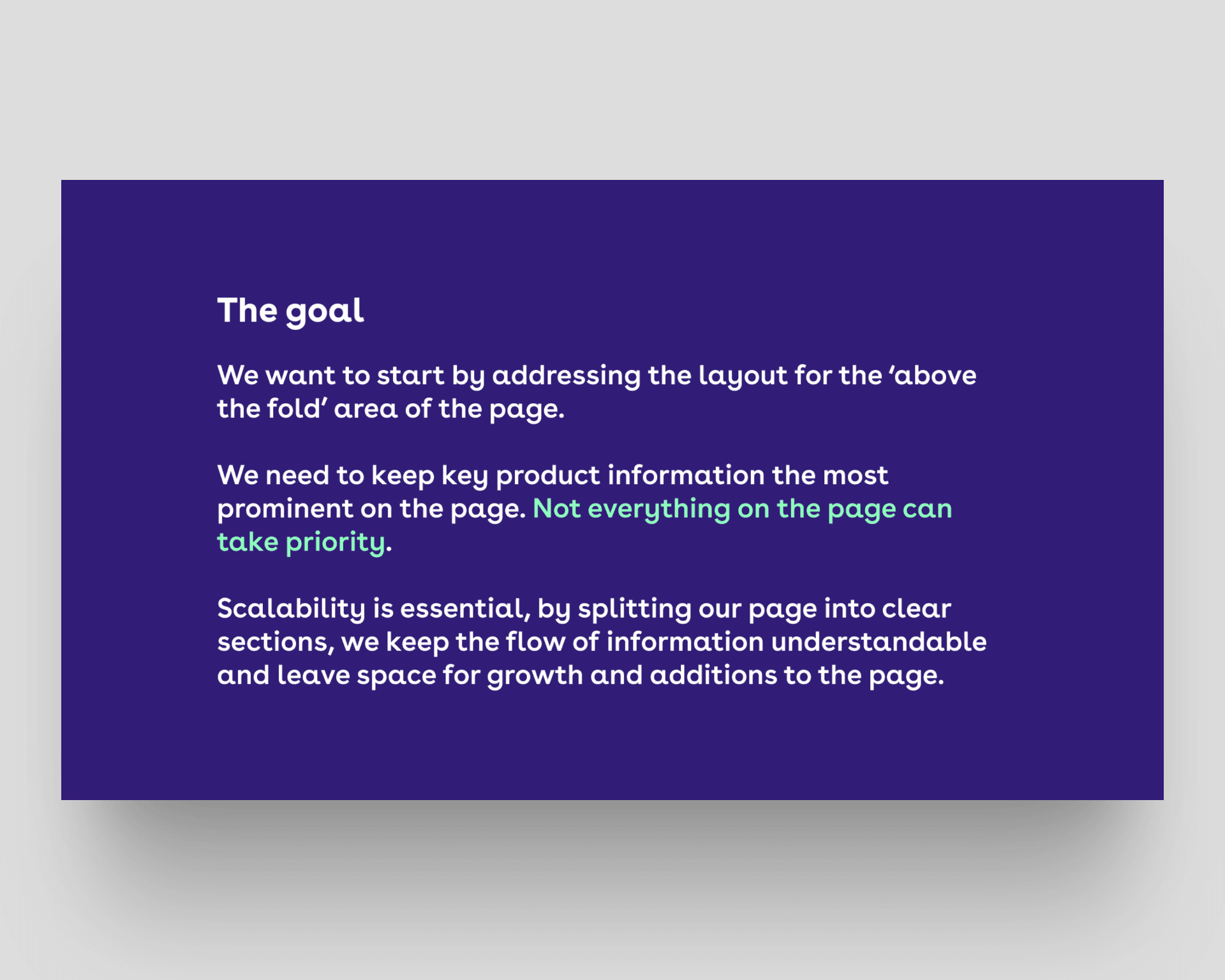
Our goal was clearly defined to bring alignment within the team.
Research insights
Analysed behavioural data including scroll depth, exit rates, and interaction with existing PDP elements. Patterns showed users were viewing pages but not consistently engaging with critical information or progressing to intent actions.
Reviewed support queries and stakeholder feedback, which highlighted repeated confusion around key vehicle details, specifications, and next steps. Competitive benchmarking showed clearer hierarchy and decision support cues on competitor pages, reinforcing the need for structural improvements.
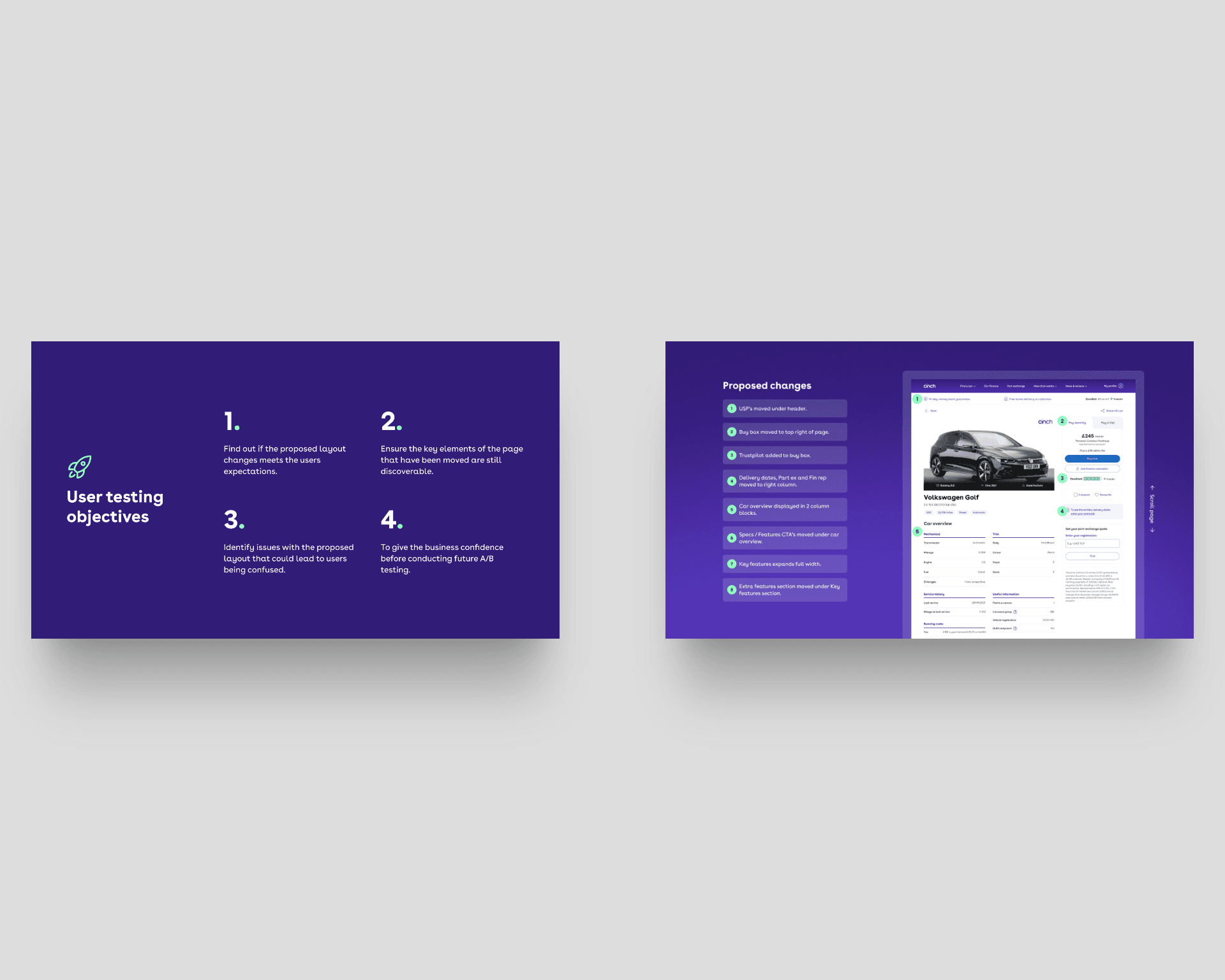
A slide deck was created explaining design rationale with user feedback to stakeholders.
My role
Led UX direction for the PDP rework, collaborating closely with product and engineering. Responsibilities included identifying friction points, redesigning content hierarchy, improving visibility of add to basket and next step actions, supporting engagement with finance and specifications, and ensuring changes worked within existing platform constraints.
Approach
Improving content hierarchy and scannability
Restructured layouts to prioritise core vehicle details, condition information, and price related elements. Supporting content was grouped into clearer sections, making the page easier to scan without feeling overwhelming. We explored adding more educational modules, but evidence suggested structure, not volume, was the issue. I prioritised hierarchy improvements over feature expansion.
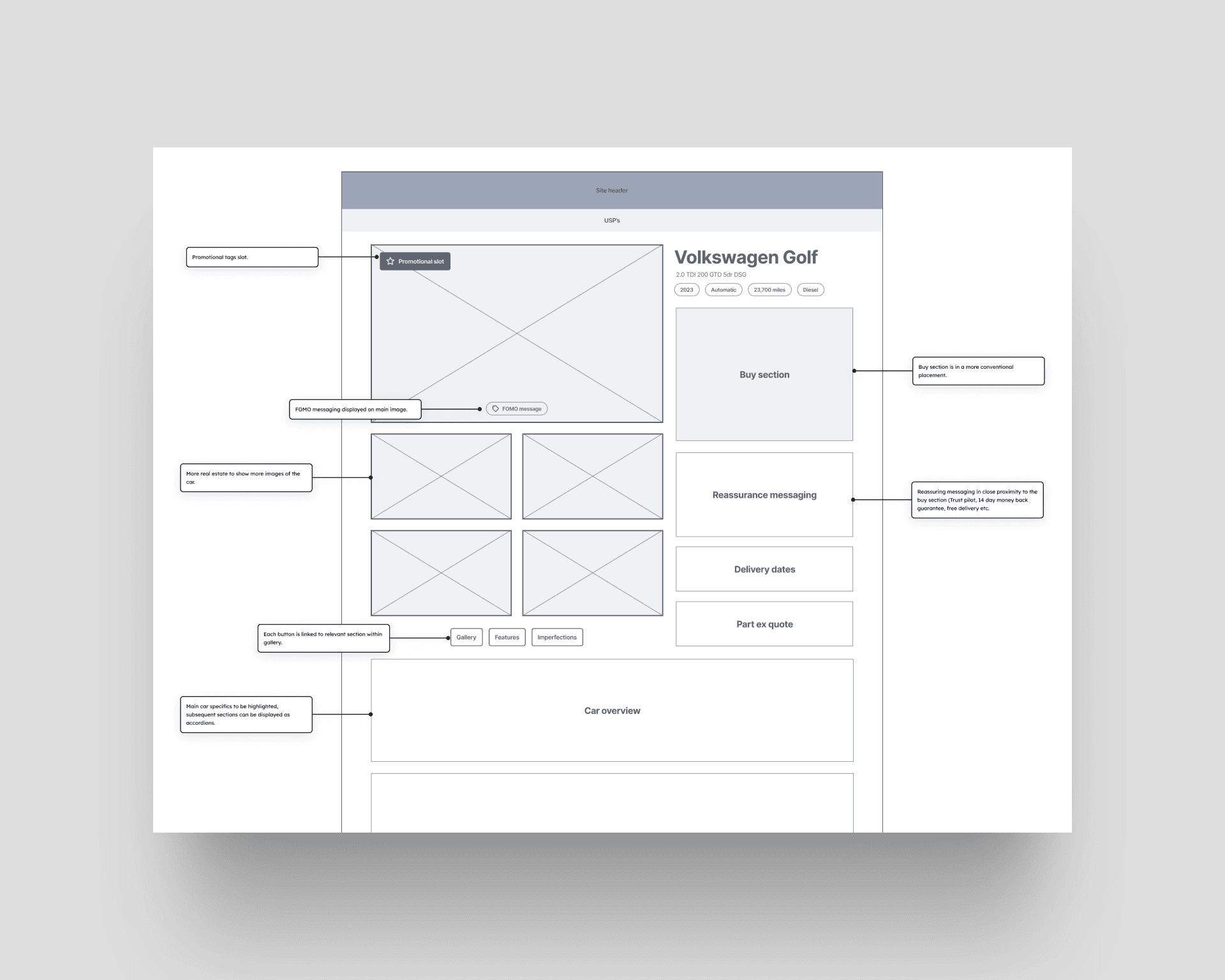
Early wireframes explored moving components into a more logical order based on testing feedback.
Strengthening decision and action cues
Add to basket and next step elements were elevated within the visual hierarchy. Supporting information such as finance and specification details was positioned to reinforce confidence rather than compete for attention.
Stakeholders wanted additional promotional elements on the page. I worked with them to integrate key messages in supportive areas while keeping the primary evaluation flow focused.
Keeping the next step in view
Vehicle pages are long, and the add-to-basket button disappeared as soon as people scrolled into specs, finance and condition details. I introduced a sticky call-to-action so the next step stayed visible while customers explored, without competing with the content they were reading.
Outcome
We tested the changes in phases against the existing page, so each one was measured on its own. The sticky call-to-action increased add-to-basket rate by 35%.
Beyond the numbers, the page now leads with what matters most: core details, condition and price first, with supporting content grouped beneath. Promotional asks from stakeholders were accommodated without pulling focus from the main evaluation flow, and the decision to fix structure rather than add more content set a clear direction for the page.
Key learnings
Content hierarchy can be as influential as new features
Reducing cognitive load increases user confidence
Small, well-placed changes can outperform bigger redesigns
What I would do next
The next step would be testing adaptive content emphasis based on user behaviour, such as highlighting finance information for price sensitive users or specification details for comparison focused users. This could further align the page experience with different decision styles and improve progression toward purchase intent.
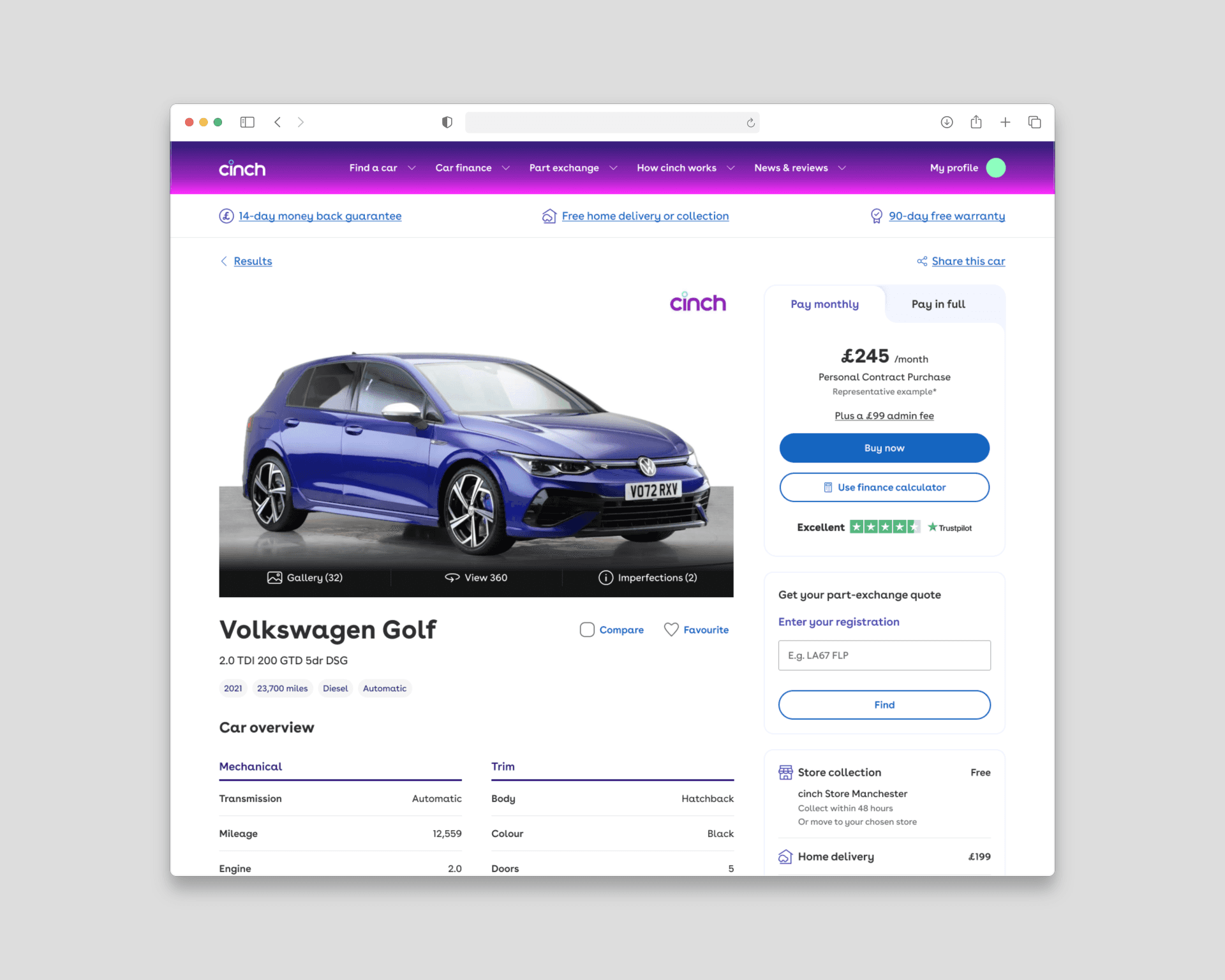
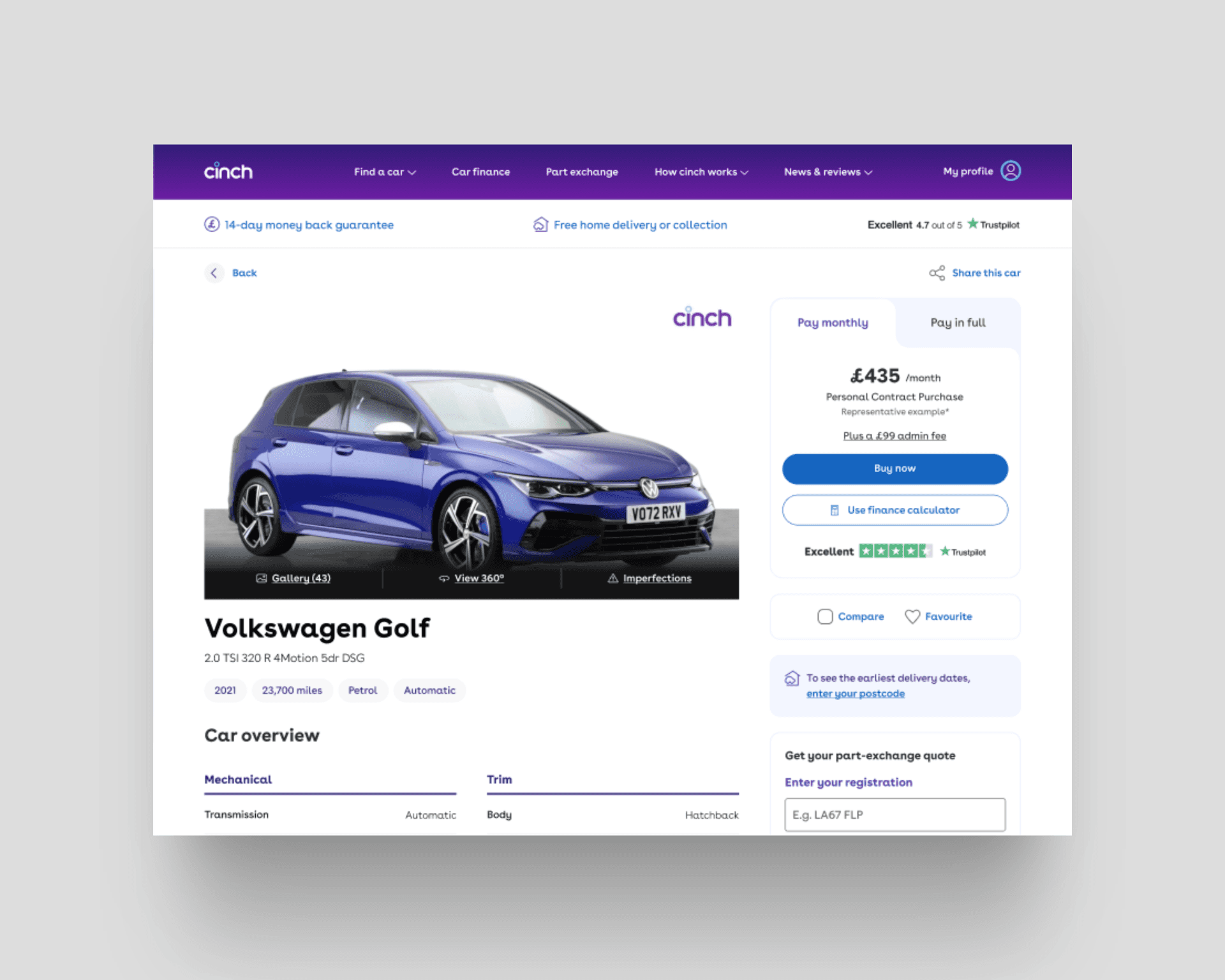
New desktop layout now follows a more familiar e-commerce pattern.
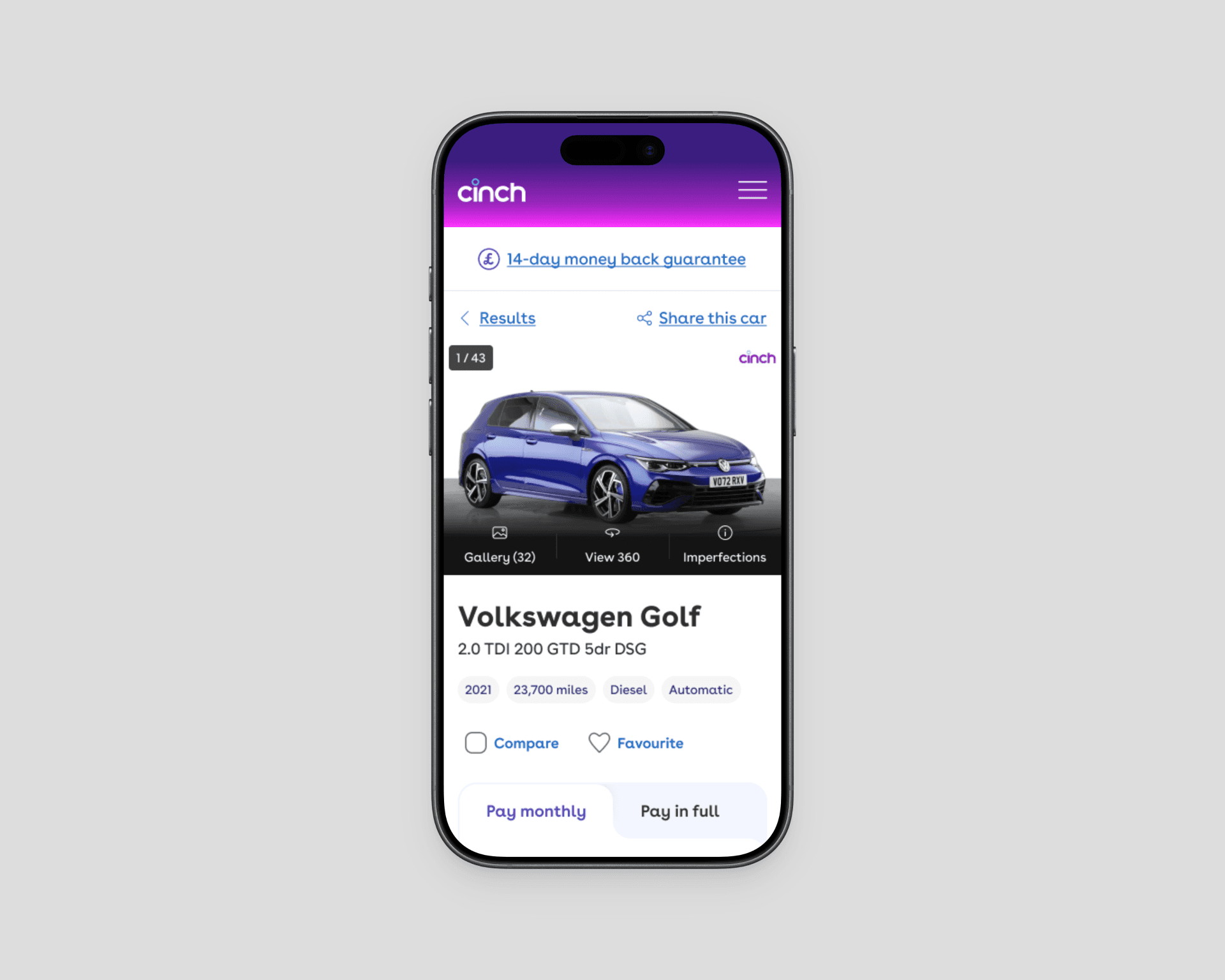
Mobile view of the revised PDP.
Other projects

AI Search Experience
Shaping how AI search fits a car buying journey where most people already know what they want.
Luxury Platform Launch
Launching a premium car buying experience within platform constraints and brand expectations.
Design System Alignment
Restoring design and development alignment to improve consistency and delivery efficiency.
EV Experience Optimisation
Reducing EV buyer uncertainty through clearer information, contextual education, and structure.